Monday, November 25, 2024

Lasers can block light itself. And that opens new paths to quantum technologies.


"A new study demonstrates that under certain conditions, light can create shadows by blocking other light, similar to how solid objects cast shadows. Credit: SciTechDaily.com" (ScitechDaily, Defying Physics: Lasers That Can Block Light Itself)

That thing can make many new things in the world of communication, weaponry, and many other things. The laser's ability to block light makes it possible to create electromagnetic wormholes through the air. That allows communication systems to transport information in a highly secured mode through the air using laser rays. The hollow laser rays make it possible to send photons through long distances and the outside light doesn't disturb those photons. 

The ability to black light means that laser rays can also block IR radiation which makes it possible to create an electromagnetic shield that protects the target against infrared radiation. That allows the creation of extremely good protection against thermal radiation. 

It's possible to use laser systems that operate in thermal infrared areas, and those systems can block thermal IR radiation. The thermal IR hologram can also be used to open the path to the tanks. If that system has enough power it can detonate the ammunition before the target. The IR hologram is sharper and easier to control than microwave systems. 

In visions, the protective field that protects vehicles and aircraft against the material ammunition can be a high-power hologram. The high-power hologram can melt incoming ammunition and then the acoustic system turns that thing away.

The ability to block light makes it possible to create holograms that can block laser rays and other types of electromagnetic radiation. That system can make it possible to protect satellites and other things against laser rays and other ammunition. The same system can also protect spacecraft against the incoming micrometeorites. 


Above NASA's vision of the futuristic spacecraft. The system could make an electromagnetic wormhole to the front of the craft. The system can use a mixture of rotating electromagnetic systems to create the channel that pulls the craft in it or raise the difference between energy levels behind the craft and in front of it. That maximizes the power of the thrust. 

The system is called: Alcubierre WARP drive. The idea is that the system maximizes the difference between energy levels at the front of the craft and behind the craft. 

The ability to block light using laser rays makes it possible to create spacecraft that can create electromagnetic wormholes at the front of it. The system can use a mixture of different electromagnetic and acoustic systems to make the channel through the air or space. That kind of electromagnetic-acoustic wormhole can make the channel that pulls the spacecraft or aircraft through the air or even space. 

That kind of channel is the system that can make the spacecraft travel faster than ever before. The idea is that the system creates a tunnel through the space and then increases the punch of the system, that thing decreases the energy level at the front of the craft. 

That means the electromagnetic tunnel at the front of the craft through space increases the difference in the energy levels at the engine exhaust and the nose. Maybe those things are not yet topical. However, the ability to create electromagnetic wormholes means that the system can transport information faster than outside that channel. 

The electromagnetic wormhole requires multiple electromagnetic devices like lasers, radio waves, and acoustic systems. Each of those systems blocks its own frequency.  Those systems' cooperation makes it possible to create a channel where there are no outside electromagnetic effects and that is a great advance for quantum computing. 

The system can create a protected channel that makes the quantum entanglement unreachable from outside radiation. That thing makes it possible to deny the thermal effect of the quantum entanglement. The ability to close outside interference out from the channel makes it possible to control superposition and quantum entanglement better than ever before. 

https://scitechdaily.com/defying-physics-lasers-that-can-block-light-itself/


https://en.wikipedia.org/wiki/Alcubierre_drive


Friday, June 28, 2024

MIT physicists created a five-lane quantum highway for electrons.


"Artist’s rendition of a newly discovered superhighway for electrons that can occur in rhombohedral graphene. “We found a goldmine, and every scoop is revealing something new,” says MIT Assistant Professor Long Ju. Credit: Sampson Wilcox/Research Laboratory of Electronics" (ScitechDaily, MIT Physicists Forge a Five-Lane Quantum Superhighway for Electrons)

The quantum information highway allows the system to transport information, stored in things like electrons. 

Boosting binary data security. The system can use cable ducts and share information between individual wires. Then each of the wires transports information forward in different lines. 

The cable ducts can also used to create a virtual quantum channel. That can work at room temperature. In those systems, the intelligent operating system shares information with each wire. Then that system drives data to the cable duct. In cable ducts, information can travel in lines like in real quantum computers. 

The parallel ports can make it possible to share data with wires. The system cuts the data row at the transmit side of the wires. And then the system moves data through wires to the receiver, where it can send it forward in the form of a row. 

However, the quantum information highway can make data communication over long distances possible. That kind of thing can be hollow nanotubes or an electromagnetism wormhole through the air. The system can use phonons to make the empty hole through the air. Then hollow laser beams close the internal layer of the wormhole away from outer influence. 

After that, the radio waves or electron cannons can shoot electrons through that channel. The quantum channel can be a hollow laser ray a hollow microwave- or a radio tornado, created using coherent electromagnetic radiation. The problem is how to protect information in the quantum channel. 

In the new MIT's quantum highway model, electrons flow or hover above the graphene layer. The problem is how to deny electron's interaction with the environment. The quantum tunnels can be put between the graphene layers. There is the possibility that physical things like graphene tubes can make that track more effective. 

The five-lane quantum information superhighway is the tool that can transform data transportation. The quantum information highway gives change to transmit information as quantum superposition. 

The qubit that travels in the quantum channel must not touch the walls of that channel, or it loses its data. That thing makes it difficult to make the quantum superhighway. The system must remove all disturbing information from the information channel. Before, it can send the qubit through it. 


https://scitechdaily.com/mit-physicists-forge-a-five-lane-quantum-superhighway-for-electrons/


Thursday, June 27, 2024

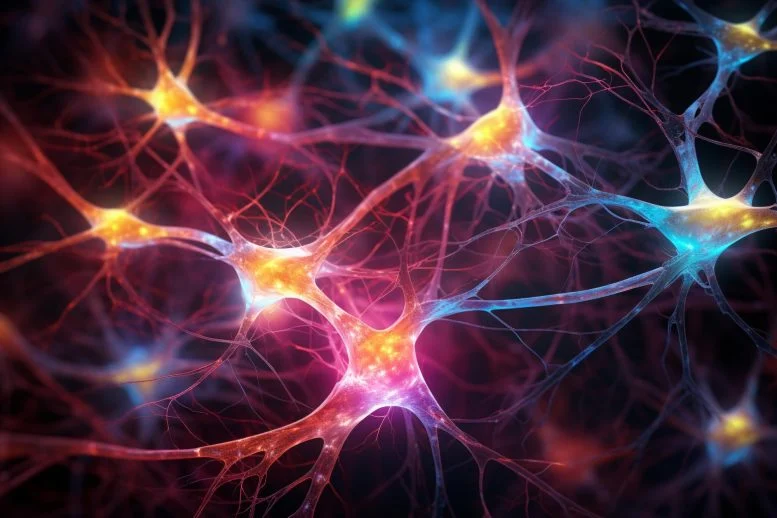
The rat's stem cells restore mouse brain circuits.


"Studies demonstrate the regeneration of mouse brain circuits with rat stem cells, providing new insights into neurological restoration and cross-species brain development. Credit: SciTechDaily.com" (ScitechDaily, Revolutionizing Regeneration: Rat Stem Cells Restore Mouse Brain Circuits)


The rat's stem cells are used to restore the mouse's brain. And that gives a new hope for brain injury patients. The ability to grow and clone stem cells limits those therapies. Genetic engineering makes it possible for that system can use genetically engineered rats to create new stem cells for humans. 

The ability to produce stem cells in the laboratory is the key element for successful stem cell therapies. Stem cells can be used to fix any tissue type, but the problem is where researchers can take the stem cells. One solution to that problem is cancer cells. The system can remove the genome from those cells. Then it must inject the new DNA into them. 

Making the new neurons from the stem cells is an interesting thing. The question is this: if we restore a mouse's brain using a rat's stem cells, does that mouse think that it's a rat? Or does it think that it's the mouse? 

The AI-controlled nanotechnology can map and create copies of any DNA. That allows the system to manipulate the DNA and inject it into the new cells. But the problem with neurons is this. When neurons are destroyed, the memories that they involve are gone. 

Genetically engineered cells allow to creation of cell cultures, that produce customized stem cells. Stem cells are the new and powerful tools for next-generation therapies. But the problem is that those stem cells must produce large numbers that can be the thing, that can make many other therapies old-fashion. 

The ability to regenerate brains and other tissues means that people are close to the thing, called immortality. Immortality requires that the person's body or some other thing replace the old DNA using new and fresh, young DNA. That allows that person can live a longer, and healthier life. DNA damage is a thing that causes aging. The nanotechnology can find the damaged bites from the DNA and replace that old DNA using nanorobots, that inject wanted DNA into those cells and mitochondria. This helps to keep the cells young. 

Nanotechnology allows to store the person's DNA in digital form. Then nanomachines rebuild that DNA structure. After that, the nanomachines replace the old DNA in the human cells and mitochondria. This is one step for new genome therapy. The system can remove old DNA from cells and then replace that old DNA. 

https://scitechdaily.com/revolutionizing-regeneration-rat-stem-cells-restore-mouse-brain-circuits/


The new 3D printers are coin-size systems.

"The tiny device could enable a user to rapidly create customized, low-cost objects on the go, like a fastener to repair a wobbly bicycle wheel or a component for a critical medical operation. Credit: Sampson Wilcox, RLE" (Scitech, Tiny Titan: MIT’s Revolutionary Coin-Sized 3D Printer Fits in Your Pocket)


Researchers created a 3D printer that is coin-size. That kind of printer can create things like microchips. But it's possible. Those tiny 3D printers can also work in extremely large-size projects. In simplest models, the 3D printers are positioned on tracks. The 3D printer itself is the tool, that can be part of the modular production systems. 

There are visions of high-temperature metal printers installed on the gantry cranes. That makes those crane printers that can make even ship-size things. The crane that the printer controls can move back and forth and the printer can move horizontally. This kind of thing can turn the crane into a high-temperature 3D printer, that can produce large-size objects. 


The small-size 3D printers can installed on robot wagons or in small quadcopters. The ability to move on the ground and in the air makes those tiny robots create complicated 3D structures. The quadcopters that use 3D printers can print almost everything. The raw material can be metal wires that can be hung from a crane. And that material travels through printers. The printer can be below the crane and the raw material travels through the air. 

The idea is that the 3D printer system navigates using the precisely operating GPS. But it's also possible that there is a laser LED in those robots. The camera on the roof or on the drone that hovers above the working area follows the printers. The system requires 3 or 4 points that it can use the triangular measuring system to the precise location of the printers. 

The fact is this. Those small-size printers can fix damages on layers with very high accuracy. That kind of system can make anything. The raw materials are limited for the 3D-printed merchandise. And the miniature printers can make it possible to create new products and make repairments on the field. The miniature printers that are installed onboard ships can repair their damages. 


https://scitechdaily.com/tiny-titan-mits-revolutionary-coin-sized-3d-printer-fits-in-your-pocket/

Tuesday, June 4, 2024

Quantum technology requires new materials.


"Artist impression of new nanostrings that can vibrate for a very long time. These nanostrings vibrate more than 100,000 times per second. Because it’s difficult for energy to leak out, it also means environmental noise is hard to get in, making these some of the best sensors for room temperature environments. Credit: Richard Norte" (ScitechDaily, Defying Gravity: Nanostrings That Mimic Quantum Effects at Room Temperature)


One particular material group that interests researchers is "zero-dimensional material".  That term means materials with one atom layer. Or maybe someday researchers can make subatomic particle layers that are like graphene, but they form protons or neutrons. 

Researchers are interested in those lattice atom layers because 2D systems are easier to control than complex 3D structures. The 2D system involves fewer variables. AI can easily predict changes in 2D systems than in 3D complex structures.  

The zero-dimensional ferroelectric vortex: a quantum whirl that can act as a quantum spot in structure. Quantum dots can act as support points for quantum entanglement. That made between those points. This makes 2D materials more effective in quantum technology, than 3D structures. It's possible that in the 3D structure some atom moves, and that destroys the quantum dot. 


But they can make things like solar cells more effective. Quantum dots' purpose in solar cells is to put energy to move in the system. They create tension in the particles, and that makes it easier to put electricity move on the layer. 

2D materials are easy to control using lasers. The nano- or quantum fibers can act as ultimate sensors. The quantum fiber is the atom chain, that senses changes in the physical environment. 

The sensor itself is in the nanotube or hollow fiber. The laser ray sees how the sensor oscillates in the tube. The laser can adjust the sensor to the energy level so that it almost sends photons. When some outcoming effect hits that over-adjusted material, it sends extra energy to sensors. 

The quantum dots are like energy hills. The 2D ferroelectric vortex can pump energy into the atom tower in that vortex. This thing makes the new high-accurate quantum radar sensors possible. 

The quantum dots are like antennae. And they can see details, that regular radars cannot see. The vortex can transport energy into that atom tower. And it can create a small-size maser system. Those systems make it possible to break stealth technology. 


https://scitechdaily.com/20-year-old-puzzle-solved-physicists-reveal-the-three-dimensional-vortex-of-zero-dimensional-ferroelectrics/


https://scitechdaily.com/21-new-laser-materials-uncovered-in-groundbreaking-global-study/


https://scitechdaily.com/defying-gravity-nanostrings-that-mimic-quantum-effects-at-room-temperature/


https://scitechdaily.com/revolutionizing-molecular-science-scientists-unveil-groundbreaking-single-molecule-detection-technique


Sunday, May 26, 2024

Generative AI can turn SciFi into reality.


"Leading AI scientists warn of the significant risks associated with the rapid development of AI technologies in a Policy Forum. They propose that major technology firms and public funders dedicate at least one-third of their budgets to risk assessment and mitigation. They also advocate for stringent global standards to prevent AI misuse and emphasize the importance of proactive governance to steer AI development towards beneficial outcomes and avoid potential disasters. Credit: SciTechDaily.com" (ScitechDaily, When Science Fiction Becomes Science Fact: The AI Dilemma)


Artificial general intelligence (AGI) can be the large language model, that can create smaller specific language models. And maybe the computer or programming industry works around large-scale language models. The clients use the AGI to generate those limited AIs. 

The idea is that the customers pay to owners of the AGI for things like server maintenance. The owners of the AGI need money for electric bills. This is one of the reasons why researchers are working on things like geothermal and solar panels for green energy production for server halls. If server halls use green energy, they don't pollute. 

And maybe the question,  what the employer hears at the magistrate when they register a company is "Have you downloaded your own AI yet"? 

And then they can download the limited "baby AI" to their servers. The limited AIs are modules that can be created to handle larger-scale and more complex data structures. 

The main problem is that people like Chinese intelligence can use those limited AIs as modules that they can use to create their own AGI. The intelligence just creates multiple companies and then downloads the limited AIs to those companies. Then those limited AIs can act as modules for complicated data structures. 

The machine as intelligent as the human waits for ten years. This is one prediction for the future. When somebody would tell me that someday we can make that thing, I would say that this kind of AI needs so many databases that it's too hard to complete. But today generative AI can make those 100-200 billion databases, if it has space, where it puts that structure. 

The intelligent machines are frightening. Somebody resists them, but they are coming. One of the reasons why somebody resists those systems is that they take jobs from humans. The problem is that. This thing like unemployment interests people only when the AI takes their jobs. When the U.S. car industry took jobs to Mexico, nobody was interested. That thing caused unemployment and social problems. But the police were enough to handle that problem. The media is interesting only when the AI takes jobs from reporters. 

The AI can make life easier. It can make working days easier. And it leaves time for innovation. But unfortunately, AI is the tool, that allows to fire half of workers. And that is the problem. The company leaders don't see AI as a chance to be more generative and more innovative. They see it as a chance to decrease the costs and crew. That is one problem with companies. 

The companies like Space X are very innovative. They know how to benefit from the publicity that rocket engineering brings to them. And that is a good thing for Elon Musk's business. The reason why Space X detonates rockets in front of people's eyes is that: these kinds of things are interesting. And interesting things bring publicity. And maybe some companies will come to buy a launch from Space X when they see that work. 

That thing causes one problem. The space industry, and especially the space launch industry accumulates into the hands of companies like Space X. The Pentagon made contracts with Space X and Starlink about their communication, location, and other systems. That thing gives very much power into the private hands. That means the private companies will get the military forces' communication in their hands. 

That means the world is decaying. There are innovative companies that make many new things. That innovation brings big profits for companies that own the patents. And then there are non-innovative companies that pay for those innovative companies about their products. That thing makes Space X and those kinds of innovative actors more and more powerful. 

Generative AI is a tool that can revolutionize engineering. In the production stage, the engineers must only give the requirement specification to the computer. Then the AI selects raw materials. And then it can start to create the product. The industrial robots can have 3D printing systems in their body. And that makes those systems more flexible than we ever imagined. 

The system can follow the data flow that comes from the rockets. And by analyzing that data the system knows if there is a problem in a certain engine. If a rocket uses many small engines the system can shut down one or two engines, if there are failures. In that process, the system just cuts the fuel and oxygenize from the engine. 

In the case of an emergency, the system can just separate the upper stage. And try to bring the payload safely to the ground. That can happen using a parachute or if the upper stage can land vertically that thing can bring the payload safely to the ground. 


https://scitechdaily.com/when-science-fiction-becomes-science-fact-the-ai-dilemma/


Wednesday, May 1, 2024

Biotechnology gives unlimited possibilities.


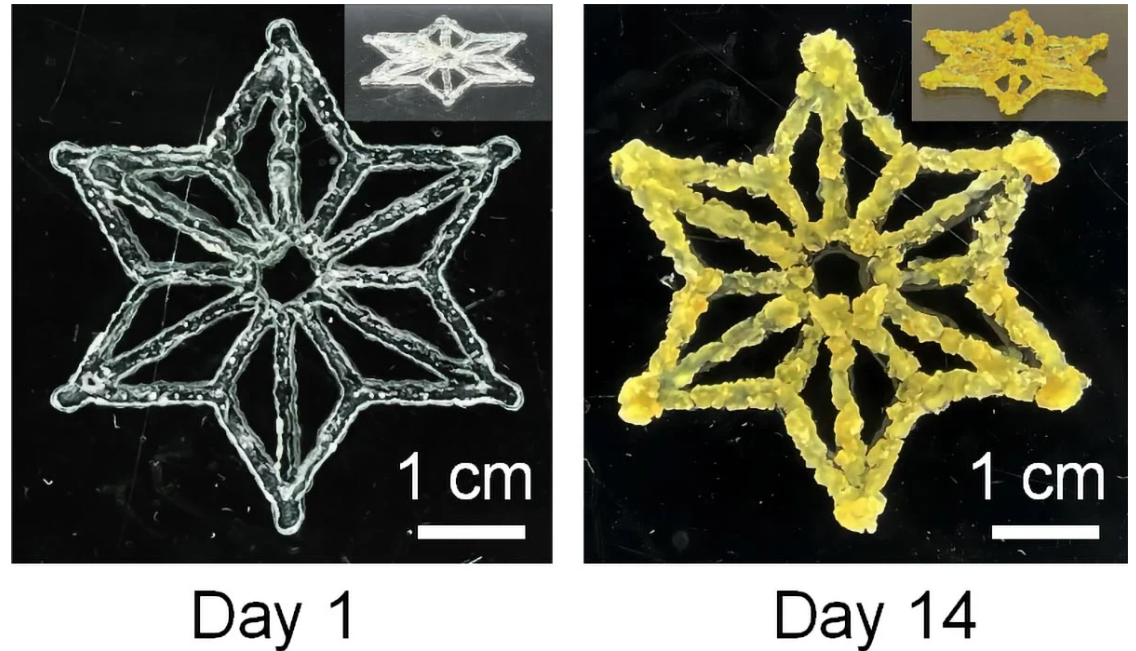
"Between day one (left) and day 14 (right), plant cells 3D printed in hydrogel grow and begin flourishing into yellow clusters. Credit: Adapted from ACS Central Science 2024, DOI: 10.1021/acscentsci.4c00338" (ScitechDaily, Crafting Programmable Living Materials With Synthetic Biology & 3D Printing)


The synthetic DNA-manipulated biomaterials revolutionized 3D printing technology. The ability to combine species makes it possible to create large-size biological structures. That follows certain shapes. But when that technology is connected with 3D printing technology, that makes the ultimate tool. The DNA-manipulated cells can create the LEGO bricks that the 3D printers can put in certain places. The ability to connect corals and starfishes makes it possible to create the structures, that the bioprinter can put in certain places. 

The silicon algae's shell genome can connected with the trees. And that can create trees with silicon shells. Genomes from electric eels can turn vegetables into energy producers. Energy trees are the tools that can solve the part of climate change. 

The ability to connect spider's silk genomes to cotton and hemp turns their fibers into the spider's silk. Make the revolution in the protective clothes. The genetically engineered bacteria can also create oil. That chemists can use to create synthetic materials. And without climate change, those genetically engineered bacteria can create gasoline by using bacteria cultures. 

Some ideas in oil refinery platform's tanks will put the bacteria that turn the biomass into oil in the anaerobic environment. Then the system pumps carbon dioxide to those chambers that make bacteria create the oil. This process is not a very good idea. In the time of climate change. 

Genetic engineering makes it possible to create a large mass of things like antibiotics and other medicals. The possibility to manipulate DNA gives unlimited opportunities for R&D workers to create things. Like cells that create electricity. Electric eels can give 600-850 volt electric impulses, and those cells can used as power sources for robots. 

The biological power source is a good replacement for fuel cells in small-size, low-power systems. The biological batteries need only nutrients. And if those cells are connected with vegetable cells. That makes it possible to use the nutrients that are created for plants. These kinds of systems are the fundamental tools in mobile technology. 


https://scitechdaily.com/crafting-programmable-living-materials-with-synthetic-biology-3d-printing/

New attack uses vulnerability in microchips.

“Modern processors are fast, in part, because they guess. Rather than waiting to find out which way a program will branch, a chip predicts t...